
Why does my puppy keep biting me?
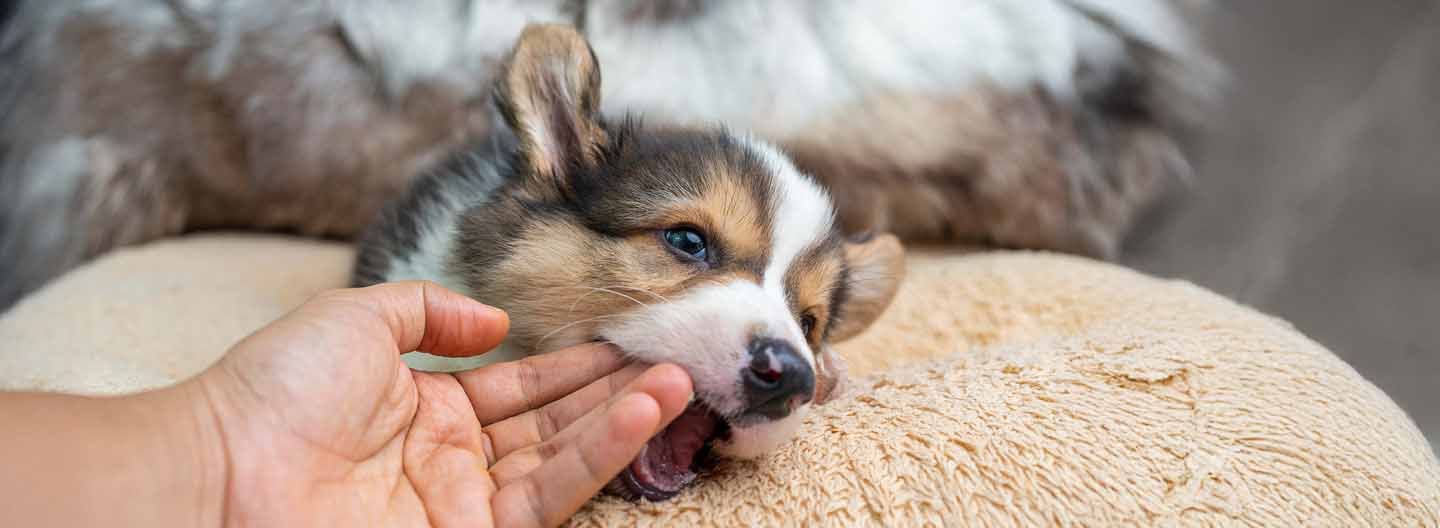
Puppies use their mouths to explore the new environments around them. They nip and bite as they play, and they bite different objects to better understand them. Puppies also use biting to relieve the teething discomfort they may be experiencing. While most biting and nipping behaviour by puppies is normal, some dogs may develop aggressive biting due to fear.
Puppies may bite or chew because they have excess energy and get overly excited. Therefore, try engaging your pup in some physical activities like fetch or short walks to use up some of their energy. Mental stimulation is equally important. Consider using puzzle toys, training exercises and interactive games to challenge their mind.
When do puppies stop biting?
Puppy biting or mouthing is a normal part of their development, especially during their teething phase, which typically occurs between 3 and 6 months of age. Your puppy could have their full set of adult teeth at approximately seven months of age, at which point the puppy biting stage should be over.
How to prevent a puppy from biting
There are many tips and tricks to prevent a puppy biting or stop a puppy biting altogether. There are a few ways to stop a puppy from biting when excited or playing, which can help prevent aggressive puppy play. Understanding and avoiding behaviours that may encourage biting as well as using positive reinforcement to teach appropriate behaviour all help to deter a puppy from biting.
Avoid encouraging biting:
- Discourage rough play: Avoid roughhousing with your puppy, which can lead to biting. Engage in gentle play with appropriate toys instead.
- No finger waving: Avoid waving your fingers or hands in your puppy’s face, as this can be an invitation to bite. Instead, keep your hands still and use toys for interactive play.
- Avoid quick movements: Quick, jerky movements can excite your puppy and encourage them to jump and bite. Move calmly and gently around your puppy to prevent overstimulation.
Positive Puppy Training
A positive reinforcement strategy focuses on rewarding your puppy for desired behaviours. Dogs repeat behaviours that give them what they want, so rewarding calm and gentle behaviour helps reinforce it. To encourage these behaviours, offer treats and praise when your puppy is calm and quiet. Consistency in positive reinforcement can gradually build a solid training routine.
Training your puppy not to bite is crucial for their development and your peace of mind. Here are some effective techniques to help curb biting behaviour:
- Bite inhibition
Bite inhibition is a puppy's ability to control the force of their bite while playing and exploring. Without learning this skill, they may not regulate their bites, leading to problem behaviour. Puppies learn bite inhibition from their mother and siblings, but you can support this development through puppy training and play sessions by redirecting hard-mouthing and positively reinforcing gentle-mouthing. Teaching your puppy to use a soft mouth helps them socialise safely with people and other animals. - Substitute a chew toy
When your puppy starts biting, redirect its attention to a puppy chew toy. Be sure to offer a variety of safe, durable toys appropriate for their age and size. You can then praise your puppy when it chews on the toy instead of your hands or furniture, encouraging an appropriate outlet for chewing instincts while also protecting your belongings. It is a form of training to stop puppy biting without them even knowing it! Always inspect toys for wear and replace them as needed to prevent choking hazards. - Puppy time out
Not sure how to stop a puppy from biting when excited? If they continue to nip and bite despite redirection, don’t hesitate to give them a brief time-out. Stop playing and refrain from offering any attention for a few minutes, as it will teach your puppy to recognise that biting leads to the end of fun activities. Place them in a designated time-out area or crate, if necessary, but ensure it's a safe and comfortable space. Consistency is key—repeat the time-out process every time your puppy bites. - Stop puppy biting
Puppy training can encourage them to choose alternative behaviours to biting. Use commands like "sit" to redirect their actions, reward them with treats and praise when they sit calmly instead of biting. If they become overexcited and bite or jump, there should be no treat or praise.
While some biting is normal, start puppy training to stop biting early, allowing them plenty of time to learn the boundaries of acceptable behaviour. Teaching bite inhibition, providing chew toys, and using positive reinforcement can help manage and reduce excessive biting.
If your puppy’s biting is intense, aggressive, or persistent despite training efforts, consulting with a veterinarian or an accredited trainer is recommended.
At what age do puppies stop biting?
Your puppy could have their full set of adult teeth at approximately seven months of age, at which point mouthing may reduce, whereas play biting is a phase that, if managed carefully, can resolve while your puppy is still a young dog.
Why is my puppy biting me aggressively?
Aggressive puppy biting can be concerning and may indicate underlying issues. It is important to seek support early from a veterinarian or an accredited trainer if you notice signs of aggressive behaviour such as growling, baring teeth, stiffening or fixed staring. Some techniques they may suggest are:
- Teach commands: Train your puppy to respond to commands like "leave it," "drop it," and "sit" to help manage their behaviour.
- Positive reinforcement: Reward calm and gentle behaviour with treats and praise. Avoid using punishment, as it can increase fear and aggression.
- Controlled environment: Create a safe and controlled environment where your puppy feels secure. Use baby gates or playpens to manage interactions.
Why is my 9 week old puppy biting so much?
Puppies explore the world with their mouths and use biting to play and interact with their environment. Here are some key points to consider about normal puppy biting:
- Playful biting: Most puppies engage in playful biting with their littermates and owners, being usually gentle and accompanied by playful behaviour, such as tail wagging and relaxed body language.
- Teething: As puppies' teeth come in, they may bite more frequently to alleviate discomfort. Providing appropriate chew toys can help satisfy their need to chew and reduce biting on hands and furniture.
- Exploratory biting: Puppies use their mouths to explore new objects and textures, which is a normal behaviour, but should be directed towards safe and appropriate items.